Shoulder Pain & Function Assessment
Ready to use templates
to streamline your practice
About the Shoulder Pain & Function Assessment
About This Assessment
The Shoulder Pain & Function Assessment is a pre-built, patient-facing assessment designed to help clinicians collect structured information relevant to capture current shoulder pain intensity, functional limitations across common daily tasks, symptom characteristics (e.g., numbness, weakness), recent injury history, and prior treatments to support triage and rehabilitation planning. highlight red-flag responses that warrant clinician review. It gives patients a clear way to provide important context before or between consultations, helping the clinician begin review with information organised around the purpose of the assessment rather than relying solely on an unstructured history. The template is intended to support efficient information gathering and clinical review while keeping interpretation and decision-making with the treating clinician.
What This Assessment Covers
The assessment explores symptoms, function & Activities, history & Red Flags, current symptoms and their severity, onset, duration and changes over time, and relevant medical and treatment history. These areas provide a broader view of the patient’s presentation and can help clinicians identify patterns, changes or contextual factors that may be relevant to follow-up. Where the underlying template includes safety-focused items, the information can also help surface responses that may warrant closer or more timely clinician review. The public template page describes these assessment domains without displaying the individual pre-built questions or answer choices.
How Clinicians Can Use It
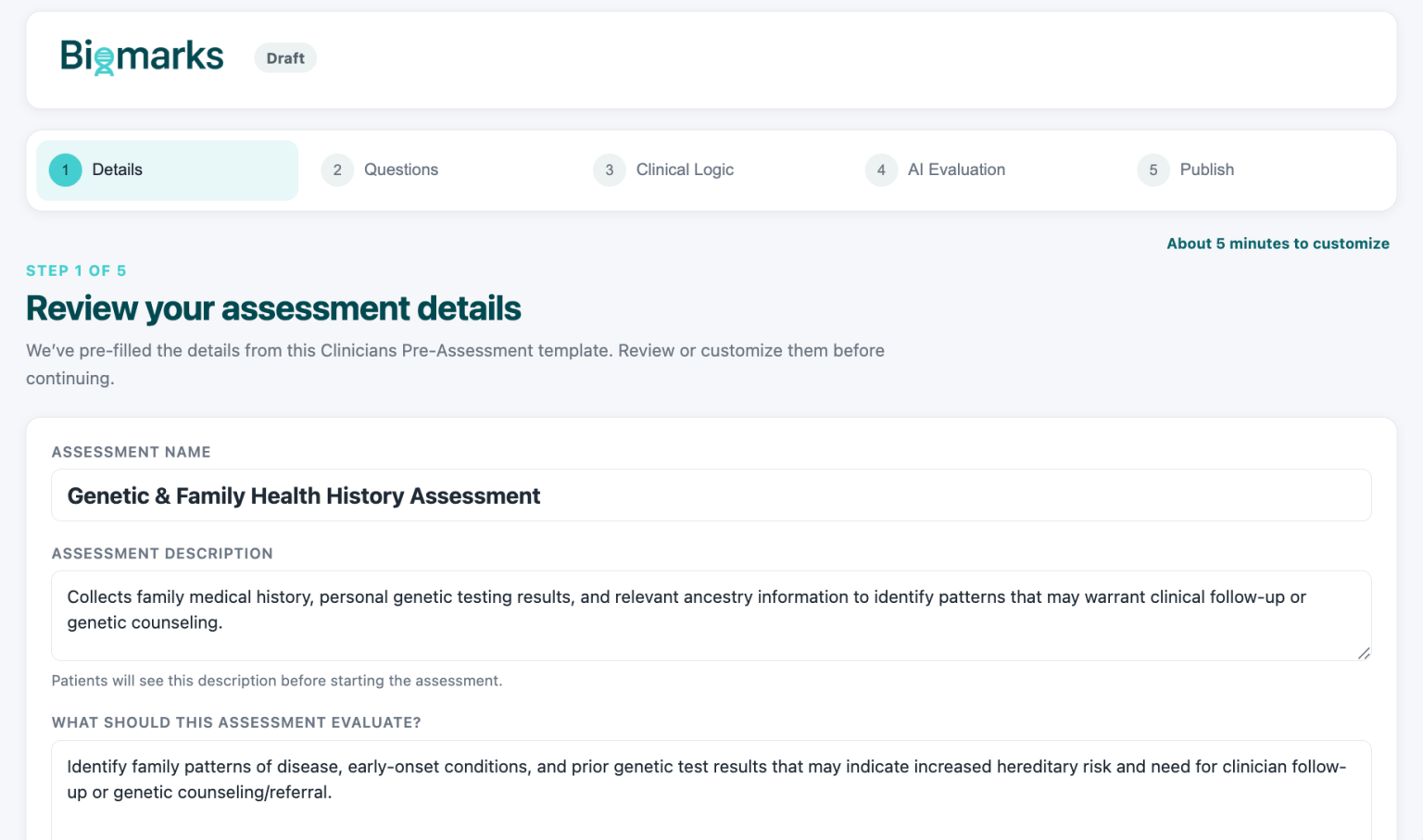
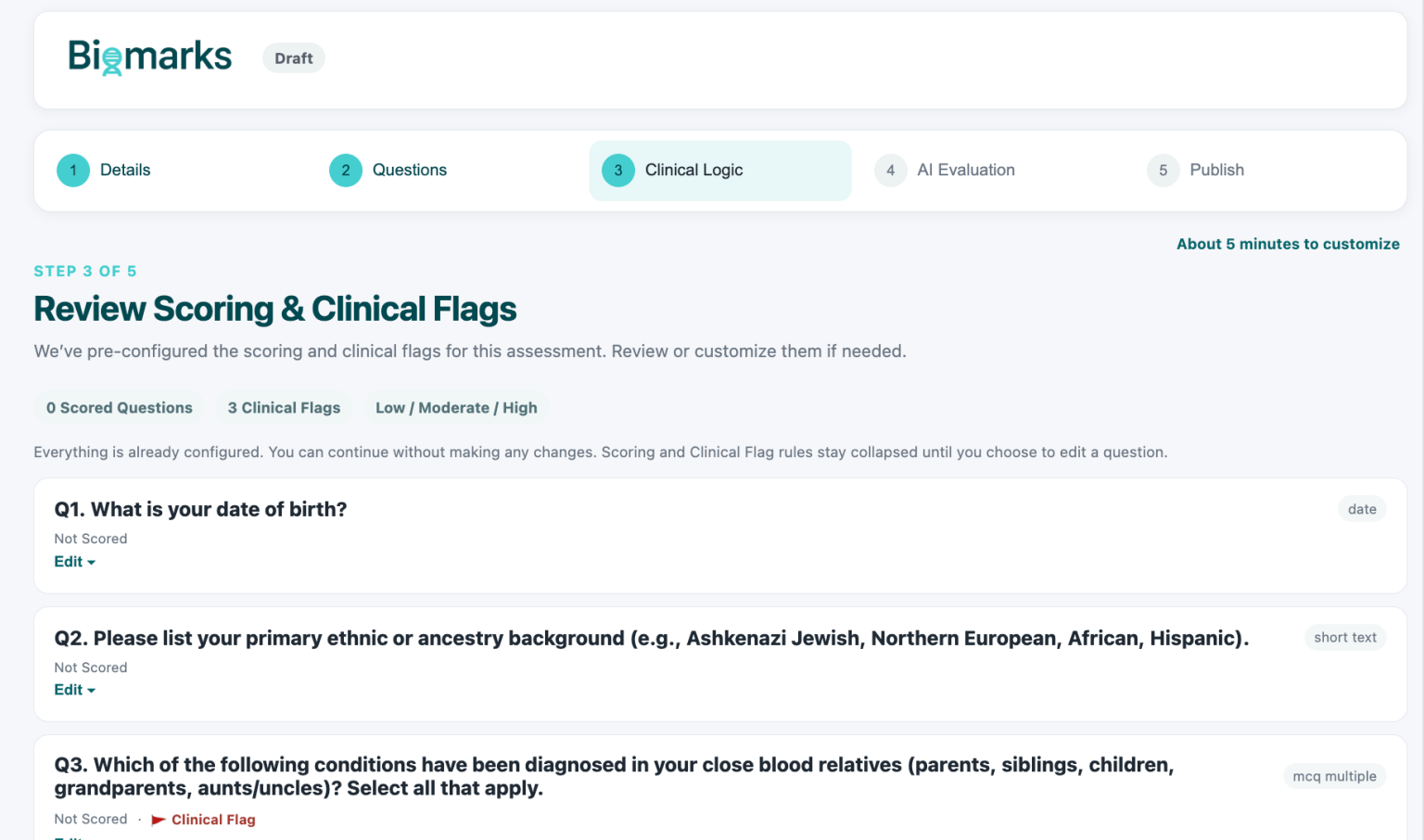
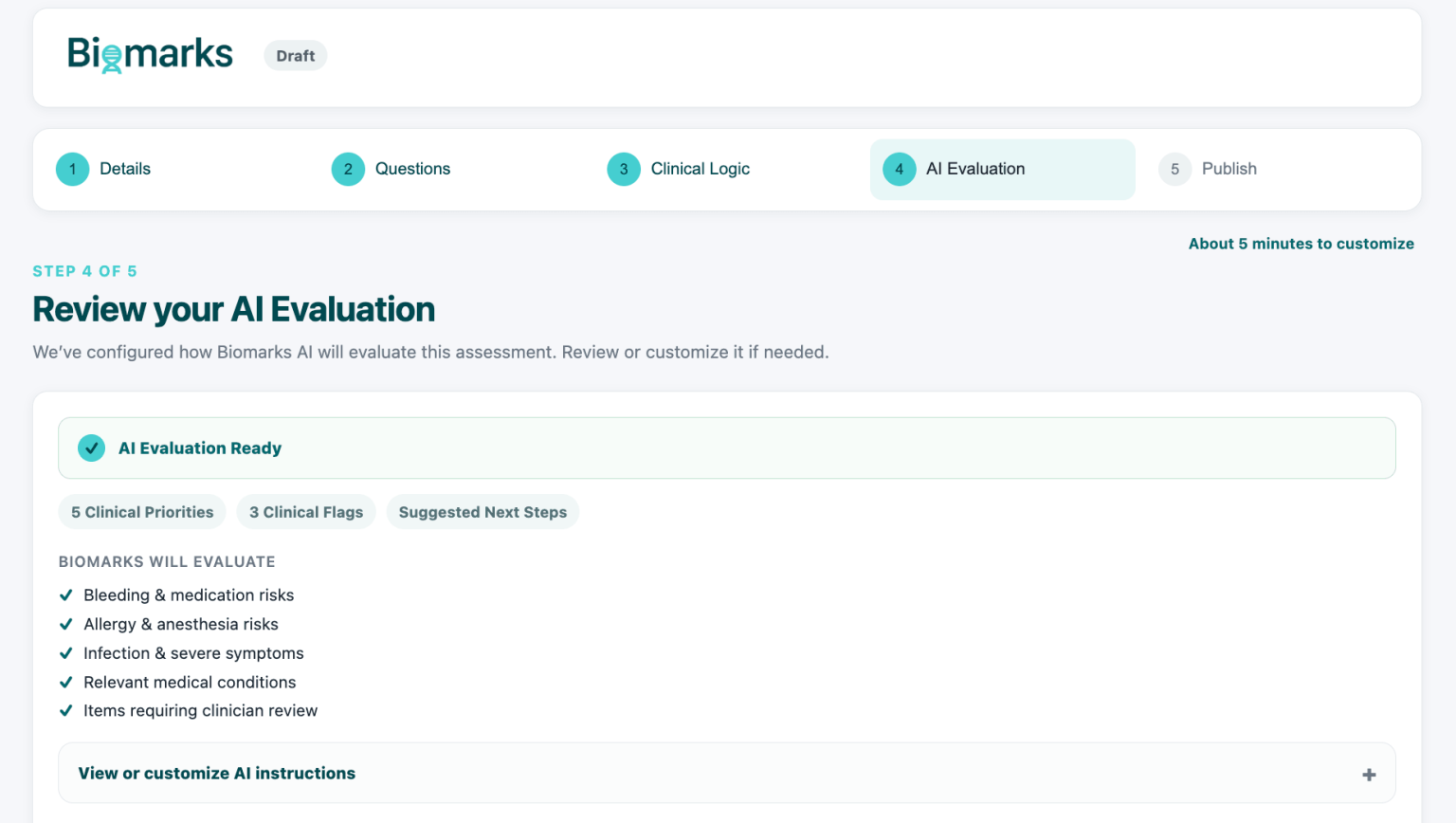
The template includes 8 pre-built questions and can be used as a starting point inside the Biomarks.ai Assessment Builder. Clinicians can tailor the assessment to their workflow, add or modify questions, configure scoring and conditional logic where appropriate, set responses for additional review, and determine how AI-assisted evaluation should organise and summarise completed responses. Once configured, the assessment can be shared with patients and reviewed alongside other relevant clinical information.
Who This Assessment Is For
This template may be useful for physiotherapists, occupational therapists, rehabilitation clinicians, orthotic or prosthetic professionals and other musculoskeletal care providers. It is designed as a flexible assessment framework rather than a substitute for clinical judgement, diagnosis or treatment decisions.
Easy to Follow Assessment Template
No need to build from scratch. Choose a ready made template with questions already included, then quickly customize it to suit your clinical workflow and patient needs.