
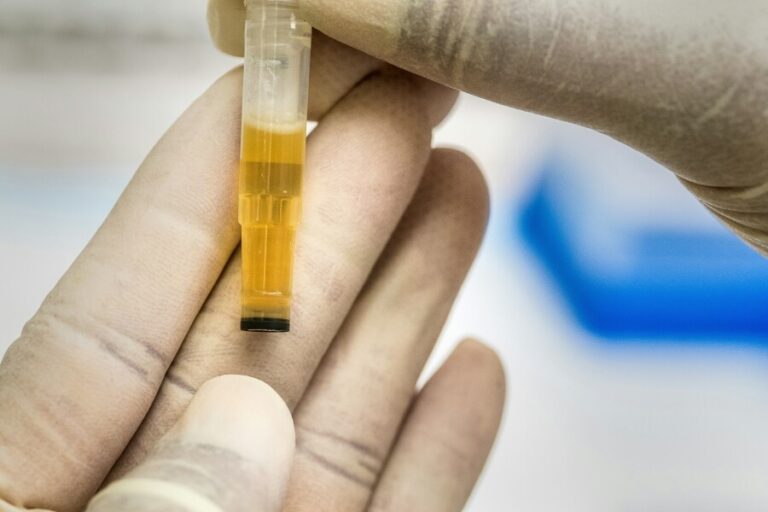
What are Urine Biomarkers?
Albumin – Urine (Microalbumin)
Albumin is a blood protein. When small traces of it (called microalbumin) show up in urine, it may be an early sign of kidney damage—often due to high blood pressure or type 2 diabetes.
Example: Think of microalbumin as a “leak”—your kidneys are letting something slip through that should’ve stayed in the bloodstream.
How it’s measured: Urine test, often as part of a kidney health screening.
Appearance / Clarity
Urine appearance (clear, cloudy, or turbid) helps determine if the urinary tract is functioning properly or if an infection may be present.
Example: Cloudy or murky urine is like foggy water in a pool—it might signal something’s off with your body’s filtration system.
How it’s measured: Visual inspection during a urinalysis.
Bacteria
Urine should be sterile—no bacteria. If bacteria are present, it likely means an infection somewhere in the urinary system.
Example: Bacteria in urine is like seeing rust in clean pipes—something’s contaminated the system.
How it’s measured: Urine culture or dipstick test.
Bilirubin
Bilirubin in urine may suggest the liver isn’t working well. It can signal conditions like liver disease or bile duct blockage.
Example: Bilirubin is like a yellow dye from the liver—if it’s showing up in your urine, your filter system may be backed up.
How it’s measured: Urine test, typically part of a urinalysis.
Color
Urine color ranges from pale yellow to dark amber. Unusual colors (like red or brown) may indicate dehydration, infection, or a more serious condition.
Example: Urine color is like your body’s hydration indicator—darker tones often mean you’re low on water.
How it’s measured: Visual inspection during urinalysis.
Glucose – Urine
Glucose (sugar) in urine usually signals that blood sugar levels are too high and may point to diabetes or hormonal issues.
Example: Glucose in urine is like spilling sugar on the floor—it’s supposed to stay in the bloodstream, not end up in waste.
How it’s measured: Urine dipstick test.
Hyaline Casts
These are tiny tube-shaped particles found in urine. A few are normal, but many can mean reduced blood flow to the kidneys or early signs of kidney issues.
Example: Hyaline casts are like traces of debris in a pipe—if there’s too much, it might signal underlying damage.
How it’s measured: Urine microscopy test.
Ketones
Ketones appear in urine when the body burns fat instead of glucose for energy—common in diabetes, keto diets, or starvation.
Example: Ketones are like smoke signals showing your body is burning fat for fuel.
How it’s measured: Urine dipstick or test strip.
Leukocytes (WBCs)
White blood cells help fight infections, but their presence in urine suggests inflammation or infection in the urinary tract or kidneys.
Example: WBCs in urine are like finding security guards in the hallway—it means there’s a threat they’re responding to.
How it’s measured: Urine dipstick or microscopic exam.
Nitrite
Normally, urine has nitrates. When certain bacteria convert these into nitrites, it can indicate a urinary tract infection.
Example: Nitrite in urine is like a bacterial fingerprint—evidence that an unwanted visitor has arrived.
How it’s measured: Urine dipstick test.
Occult Blood
This test checks for hidden (not visible) blood in urine, which may suggest kidney or bladder issues, infections, or injuries.
Example: It’s like spotting a red flag—if blood is leaking into urine, there may be damage somewhere in the urinary system.
How it’s measured: Urine dipstick or microscope.
pH
Urine pH measures how acidic or alkaline it is. Imbalances may point to kidney stones, infections, or chronic disease.
Example: Urine pH is like a pool’s pH test—it tells you if the chemical environment is balanced.
How it’s measured: Urine dipstick test.
Protein
Normally, protein stays in the blood. When it shows up in urine, it may signal kidney damage or disease.
Example: Protein in urine is like finding tools outside the toolbox—something isn’t working as it should.
How it’s measured: Urine test (proteinuria screening).
Red Blood Cells (RBCs)
Red blood cells carry oxygen. In urine, they can point to infection, kidney disease, or trauma to the urinary tract.
Example: RBCs in urine are like seeing paint chips in clean water—there may be internal wear and tear.
How it’s measured: Urine microscopic analysis.
Specific Gravity
This tells how concentrated the urine is. It helps reveal hydration levels and kidney function.
Example: Specific gravity is like measuring how salty soup is—it shows how concentrated your fluids are.
How it’s measured: Urine dipstick or refractometer.
Squamous Epithelial Cells
A few are normal, but a large number may suggest infection or that the urine sample was contaminated.
Example: Too many epithelial cells in urine is like leaves in a swimming pool—may signal something isn’t clean.
How it’s measured: Microscopic urine analysis.
White Blood Cell (WBC) Count – Urine
High WBCs in urine often indicate infection or inflammation in the urinary system.
Example: WBCs are your immune defenders—if they’re showing up in urine, they’re likely fighting something there.
How it’s measured: Urine test (microscopy or dipstick).
Yeast
Yeast in the urine suggests a fungal infection, like Candida, which may affect the bladder or vaginal area.
Example: Yeast is like mold in damp places—if it’s present, your internal environment may be unbalanced.
How it’s measured: Urine microscopy or culture.

